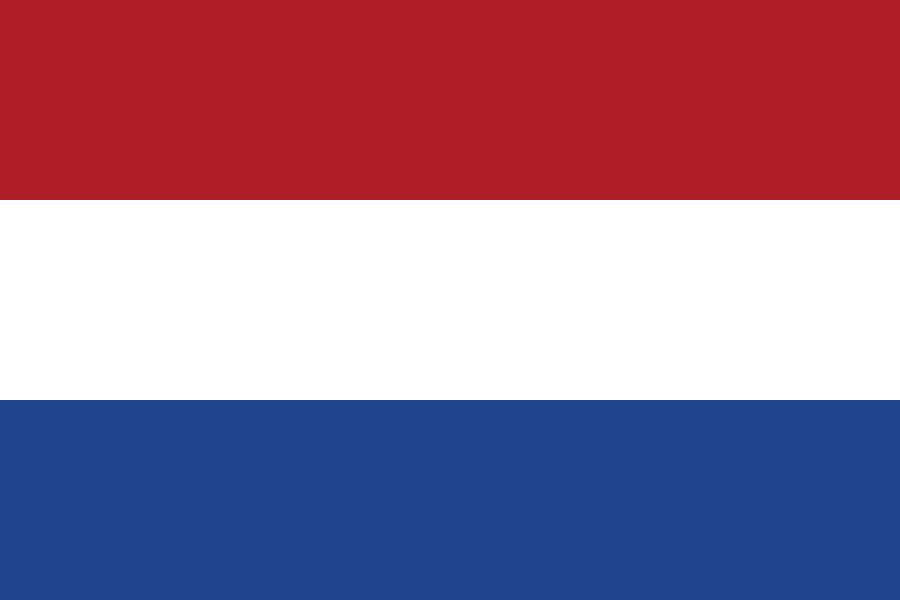
The Dutch national flag is a 2:3 horizontal tricolor of equal bright-vermilion, white, and cobalt-blue bands. A 1937 Royal Decree formally established the three colors.
Specification
Dutch government protocol describes three horizontal bands of equal height: bright vermilion above, white in the center, and cobalt blue below. Defence specifications use a fly one and a half times the hoist, producing the familiar 2:3 rectangle.
Display colors
HEX #AE1C28 / asset screen valueHEX #FFFFFF / RGB 255, 255, 255HEX #21468B / asset screen valueConstruction notes
Start with a rectangle three units wide and two units high. Divide the hoist into three equal horizontal bands, then fill them red, white, and blue from top to bottom. Government specifications define textile colors more precisely than a web display value can reproduce.
Historical record
The Royal House records the first reference to a Dutch flag in 1572, when the bands were orange, white, and blue. Red gradually replaced orange during the seventeenth century. After periods of alteration and replacement around the turn of the nineteenth century, the undecorated red-white-blue tricolor returned; Queen Wilhelmina’s 1937 decree formally fixed its colors.
Source trail
Royal House of the Netherlands: Dutch flag and history ↗
Netherlands Ministry of Defence: ceremonial and flag protocol ↗
Netherlands Ministry of Defence: national-flag colors and dimensions ↗