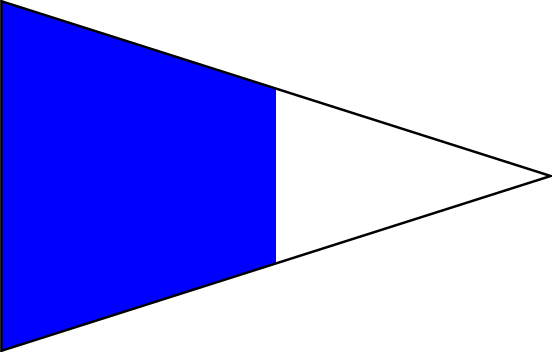

Quick answer
The Second Substitute repeats the second flag of the relevant class, counted from the top of the group. The class—alphabetical flags or numeral pennants—is determined by the flag immediately preceding the substitute. This allows repeated characters when only one set of flags is carried. Official signaling instructions, reproduced in Pub. 102.
| Item | Evidence-supported description |
|---|---|
| Designation | Second Substitute |
| Function | Repeats the second signal flag of the applicable class. |
| Reuse | A substitute cannot be used twice within the same group. |
| Decimal point | Disregard the answering pennant when it serves as a decimal point when determining which substitute to use. |
| Dimensions and colours | No exact ratio, panel dimensions or physical colour standard verified for this proposal. |
Reading a mixed group
Pub. 102 illustrates L 2330 with L → 2 → 3 → Second Substitute → 0. The substitute repeats numeral 3, the second numeral, rather than counting the initial letter. Section 5, paragraph 6.
Construction and evidence limits
The verified evidence supports signaling procedure, but this proposal does not establish a manufacturing specification. No exact geometry or colour values have been inferred from artwork. Common manufactured proportions have not been verified; screen approximations and editorial reconstructions should not be presented as official standards.
Historical context
The revised Code was adopted by IMCO in 1965; the 1969 edition became effective on 1 April 1969. These are Code milestones, not verified introduction dates for this particular flag. Pub. 102, preface.