
Quick answer
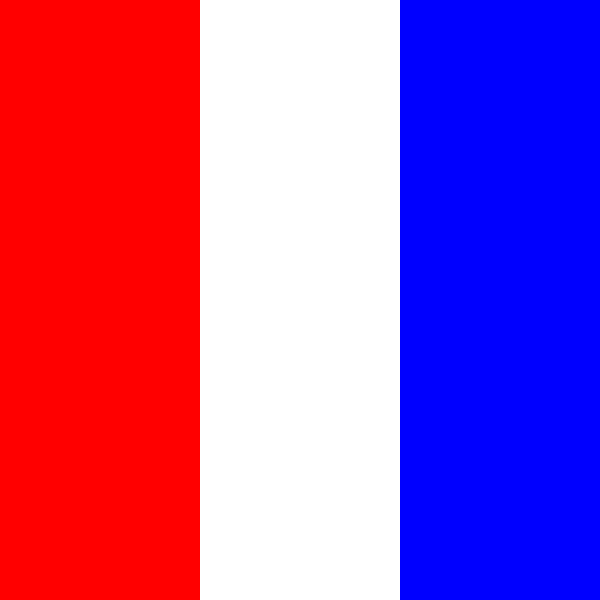
Tango represents T. Its single-letter meaning is: “Keep clear of me; I am engaged in pair trawling.” The flag has vertical red, white and blue bands, reading from hoist to fly. NGA, International Code of Signals.
| Item | Evidence-supported description |
|---|---|
| Code word | Tango |
| Pattern | Vertical red-white-blue bands |
| Morse equivalent | One dash |
| Overall proportions | No mandatory numerical ratio established here |
| Colour standards | No authoritative numerical colour values established here |
Construction and artwork limits
The official identification plate supports the band arrangement, but is not treated here as a dimensioned manufacturing drawing. No exact band widths, textile tolerances, Pantone references or screen colour values are inferred from it. Common manufactured proportions have not been verified. A screen approximation or editorial reconstruction should be labelled accordingly, rather than presented as an official specification.
Signal context
T followed by four numerals denotes local time: hours, then minutes. This differs from T alone. The Code marks T with an asterisk: its use by sound must comply with the collision regulations. See the NGA signal tables, pages 21–22.
History and current status
The revised Code was adopted in 1965; the United States 1969 edition became effective on 1 April 1969. These are Code milestones, not established dates for Tango’s first design. NGA preface.
IMO states that the 2005 edition and its subsequent edition with editorial improvements are equally valid. Tango is therefore presented within the current Code framework, rather than as a retired historical flag. IMO publication overview.