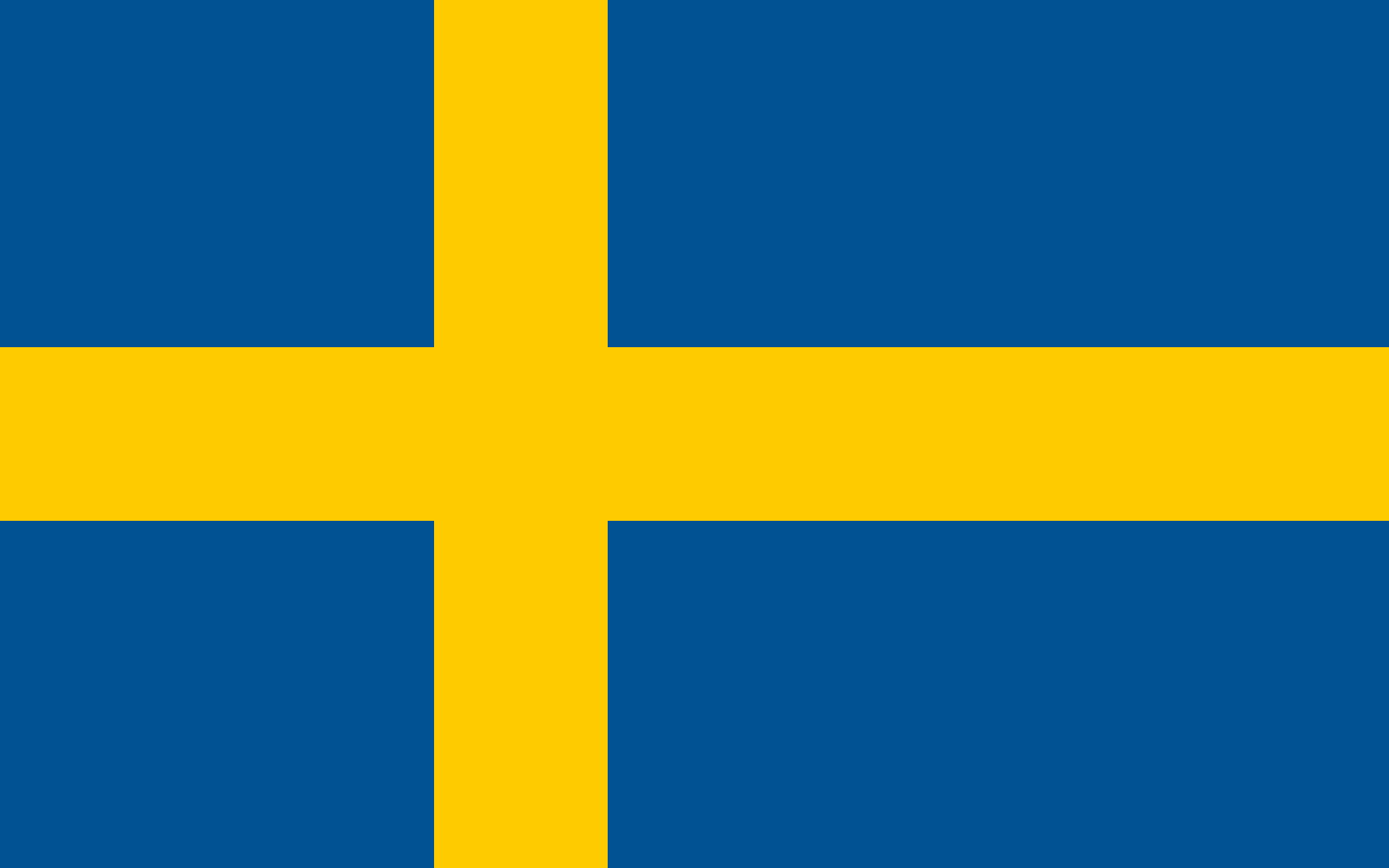
Sweden’s rectangular national flag is a 10:16 light-blue field with a gold-yellow Nordic cross. It divides 4:2:4 vertically and 5:2:9 horizontally.
Specification
The Flag Act describes a blue flag with a yellow cross set at right angles to the edges. For the rectangular form, each hoist field is four units high and five units long; each fly field is four units high and nine units long. The cross arms are two units wide.
Reference colors
HEX #005293 / asset screen valueHEX #FECB00 / asset screen valueConstruction notes
Start with a 10-by-16 rectangle. Place the two-unit cross after five units from the hoist and four units from the upper edge. The Flag Act also defines a three-tailed form, but the rectangular flag is the general national form and the specimen recorded here.
Historical record
Sweden has used blue flags with yellow crosses for centuries. The present rectangular national form dates from 1906, after the dissolution of the union with Norway. The current Flag Act was issued in 1982 and entered into force in 1983, preserving the 10:16 construction while regulating the modern color specification.
Source trail
Swedish Parliament: Flag Act 1982:269 ↗
Sections 1–3 describe the design, proportions, and colors; section 4 distinguishes use of the rectangular and three-tailed forms.