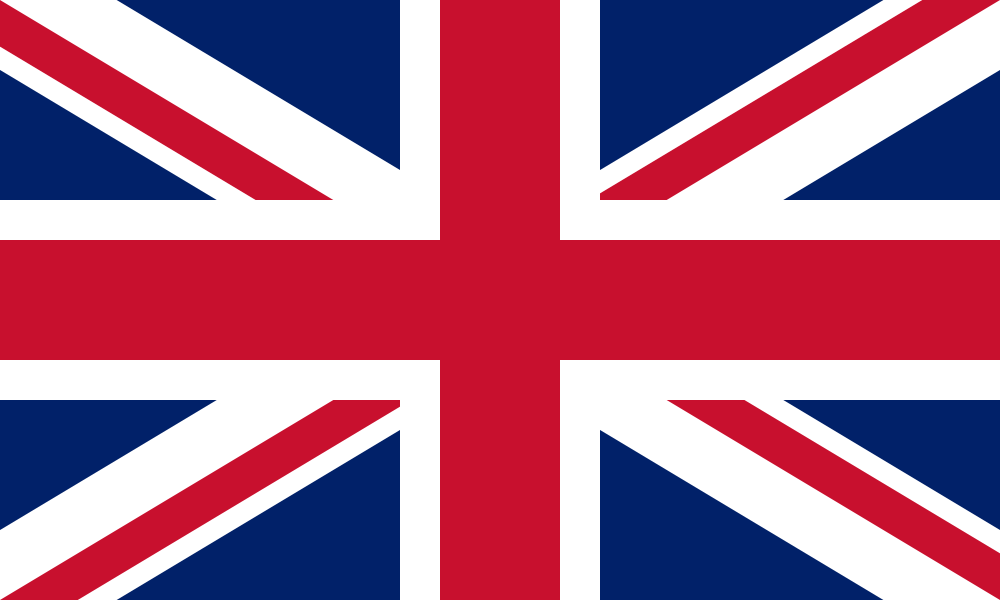
The Union Flag combines a red upright cross, white and red diagonal saltires, and a blue field. The 3:5 version shown here is the College of Arms form approved for most uses on land.
Specification
The proclamation of 1 January 1801 describes the flag heraldically: the saltires associated with St Andrew and St Patrick are quartered and counterchanged, with the red saltire edged in white, and the red cross associated with St George is also edged in white above them. The proclamation does not prescribe a single ratio.
Display colors
HEX #012169 / asset screen valueHEX #C8102E / asset screen valueHEX #FFFFFF / RGB 255, 255, 255Construction notes
The diagonal red saltire is deliberately offset within its white field. At the upper hoist, the broad white diagonal lies above the red diagonal; reversing that relationship displays the flag upside down. A symmetric red diagonal cross is therefore not a faithful construction.
Historical record
The present composition dates from 1801, when the union with Ireland led to the addition of the red saltire associated with St Patrick to the earlier union design. The College of Arms now publishes approved 3:5 and 1:2 versions for convenient standard use.