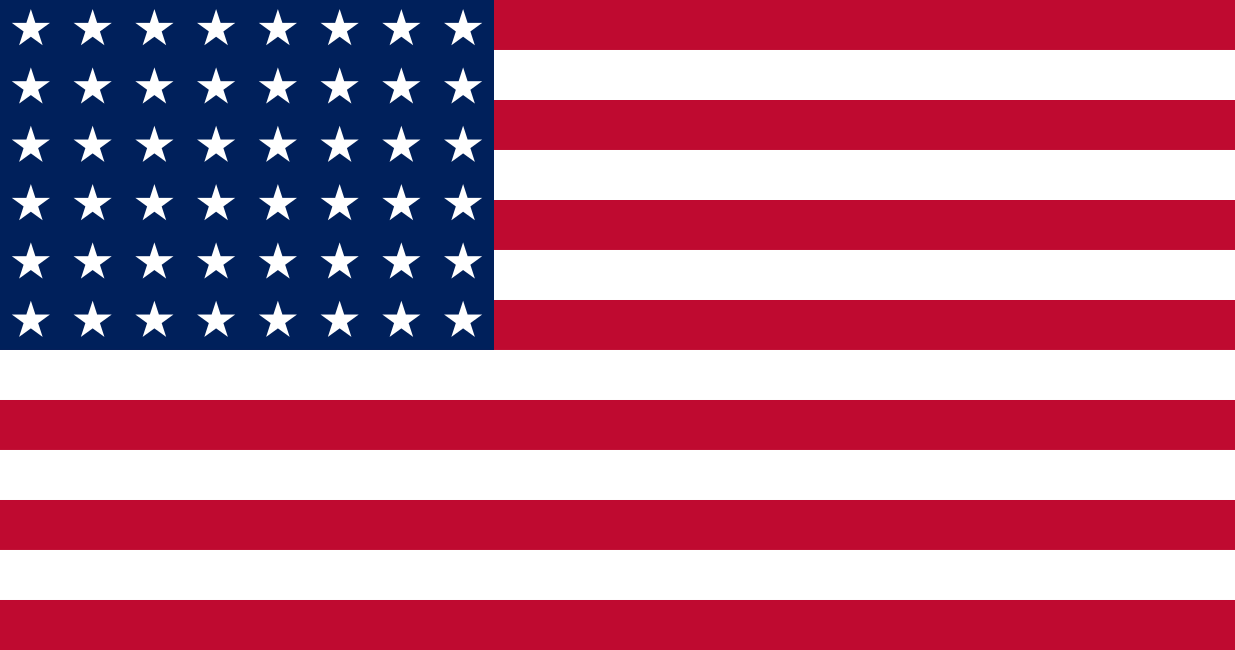
The 48-star U.S. flag placed its stars in six aligned horizontal rows of eight. It represented the Union after New Mexico and Arizona became states.
Specification
The flag retained thirteen alternating red and white stripes. Its blue union carried 48 white stars in a regular rectangular grid. The 1912 standard ended a period in which government flags had used many different proportions and star arrangements.
Display colors
Common digital referenceCommon digital referenceHistorical record
President William Howard Taft’s administration approved the six-by-eight arrangement in 1912. The flag became official on 4 July after the admission of New Mexico and Arizona. It remained current for 47 years, longer than any earlier star count, until Alaska’s admission produced the 49-star flag.
Record boundaries
This entry describes the standardized federal design, not every civilian-made 48-star flag. Surviving flags can differ in ratio, star orientation, and construction while still belonging to the same historical star-count period.
Source trail
Congressional Record: federal history of U.S. star arrangements ↗
The record notes Executive Order 1556 of 24 June 1912 and the Joint Army–Navy Board’s six-by-eight arrangement.
Government dimensions, civilian manufacture and display colors
The imported record gives 10:19, hoist to fly, as the government standard: ten units of height to nineteen units of length. This describes the standardized federal design. Civilian-made 48-star flags could differ in proportions, star orientation and construction, so a surviving civilian flag does not by itself establish the government specification.
The page’s existing display references are #B22234 for red and #3C3B6E for blue. These are digital screen approximations, not official 1912 color specifications. The screen illustration should not be treated as definitive evidence of historical fabric colors.
The design in words
The specimen has thirteen alternating red and white horizontal stripes. A blue rectangle in the upper corner next to the flagpole contains 48 white stars in six aligned horizontal rows of eight. This rectangle, called the union, is seven stripes high.
The hoist is the edge next to the flagpole; in a proportions statement it means the flag’s height. The fly is the free end away from the pole; in a proportions statement it means the flag’s length from the pole toward that end.
Frequently Asked Questions
When was the 48-star United States flag officially used?
Its official period ran from 4 July 1912 through 3 July 1959. The 48-star design represented the Union after New Mexico and Arizona became states.
When was the 48-star flag superseded?
Its final official day was 3 July 1959. The 49-star flag replaced it on 4 July 1959, following Alaska’s admission. The final day of the old design and the replacement date are consecutive days.