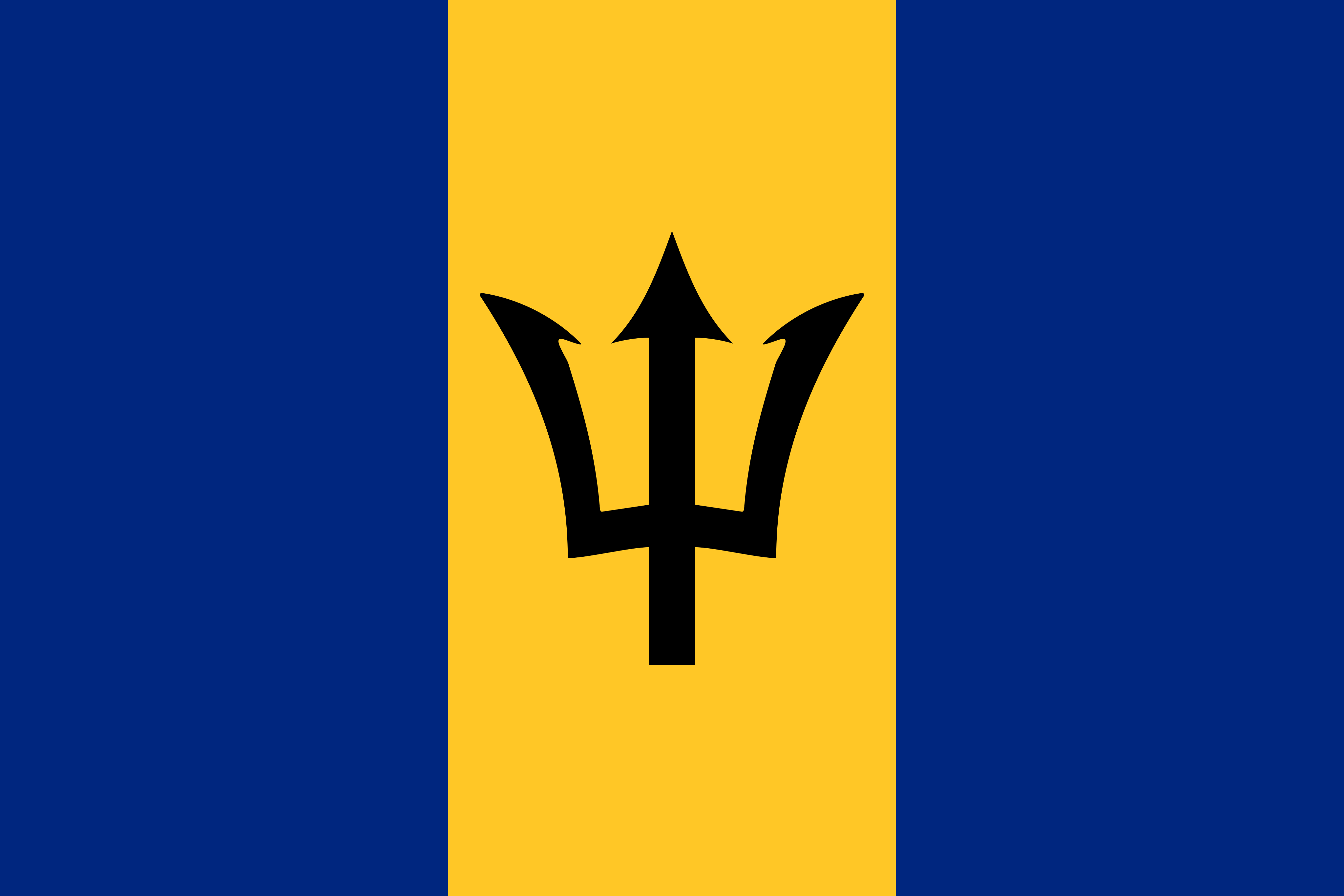
Barbados’s national flag has blue outer panels, a gold middle panel and a black broken trident. Adopted on 30 November 1966, it is the current national design. The hoist measures two units for every three along the fly. [2] [4]
Specification
Chapter 300A, First Schedule, Part II, prescribes three equal vertical panels: ultramarine at either side, gold between them, with a black broken trident centered on the flag. Its proportion is written 3:2 (fly to hoist), recorded here as hoist : fly 2:3. [1] The Foreign Ministry’s etiquette code applies this proportion to flags flown on land and at sea. [3]
Colors
The statutory references are ultramarine BCC 148 and gold BS 0/002; black is named without a numerical code. [1] FOTW also reports Pantone 280 and 123 in Olympic guidance. Those event specifications are not substituted for the statutory references. [4]
These fills come directly from the specimen SVG. They are screen approximations, not certified conversions, textile standards or official HEX values. [5]
#00267F / specimen screen value#FFC726 / specimen screen value#000000 / specimen screen valueConstruction notes
The inspected SVG has a 0 0 24000 16000 viewBox. An ultramarine rectangle covers the field; an 8000-unit gold rectangle begins at x=8000, leaving three equal visible panels. The black device uses a path and its reflected copy about x=12000. Its top and bottom are y=4124 and y=11876, centered vertically on y=8000; the small overlap of the halves prevents a central seam. These are artwork coordinates and observed symmetry, not official trident dimensions. [5]
The schedule supplies no measured trident outline. [1] FOTW notes differences between published trident renderings. This specimen matches the prescribed panel geometry and centered upright device, but its curves and emblem scale remain a reference rendering. No certified government vector or complete physical production drawing was verified. [4]
Symbols and usage
Parliament explains blue as the island’s sea and sky and gold as its beach sand. The device refers to Neptune’s trident; its broken shaft signifies the ending of colonial ties. [2]
The official etiquette code calls for a flag in sound condition, gives the national flag precedence, and places flags of different nations on separate staffs of equal height. Consult it for the complete display instructions. [3] This entry covers the national flag; FOTW separately identifies service ensigns. [4]
Chapter 300A sections 3–6 address perpetual Crown copyright, licensing for specified sales and organizational uses, and defacement. Commons’ public-domain label does not negate these Barbadian provisions. [1] [5]
Historical record
Parliament credits Grantley Prescod with the design and dates independence to 30 November 1966. FOTW gives that same date for flag adoption. It is the beginning of the period catalogued here, rather than the date of the later regulatory Act. [2] [4]
The consolidated Act records commencement on 1 April 1976, citing S.I. 1976 No. 75. This is not a new flag-adoption date. No separate 1966 flag proclamation was verified. [1] The current Parliament description and updated specialist record retain the vertical-panel design. [2] [4]
Source trail
- Attorney General: National Emblems and National Anthem of Barbados (Regulation), Chapter 300A ↗ — consolidated text, printed pages 3–6; commencement, sections 3–6, First Schedule Part II. PDF text consulted; scan-image retrieval failed. Color references are corroborated by Parliament.
- Barbados Parliament: Independence / The National Flag ↗ — official description, designer, color references, symbolism and independence date.
- Ministry of Foreign Affairs: Code of Etiquette for the Use of the National Flag ↗ — indexed PDF page 1: proportions for land and sea and display precedence.
- Flags of the World: Barbados ↗ — adoption, current national status, differences in trident artwork and event color guidance; contributor reports distinguished from legislation.
- Retrieved SVG: country-flags ↗; Commons contributors and rights declaration ↗; local asset register →.


Sources checked 15 September 2026. Related records: The Bahamas and Jamaica. Browse national flags or the Flag Index.