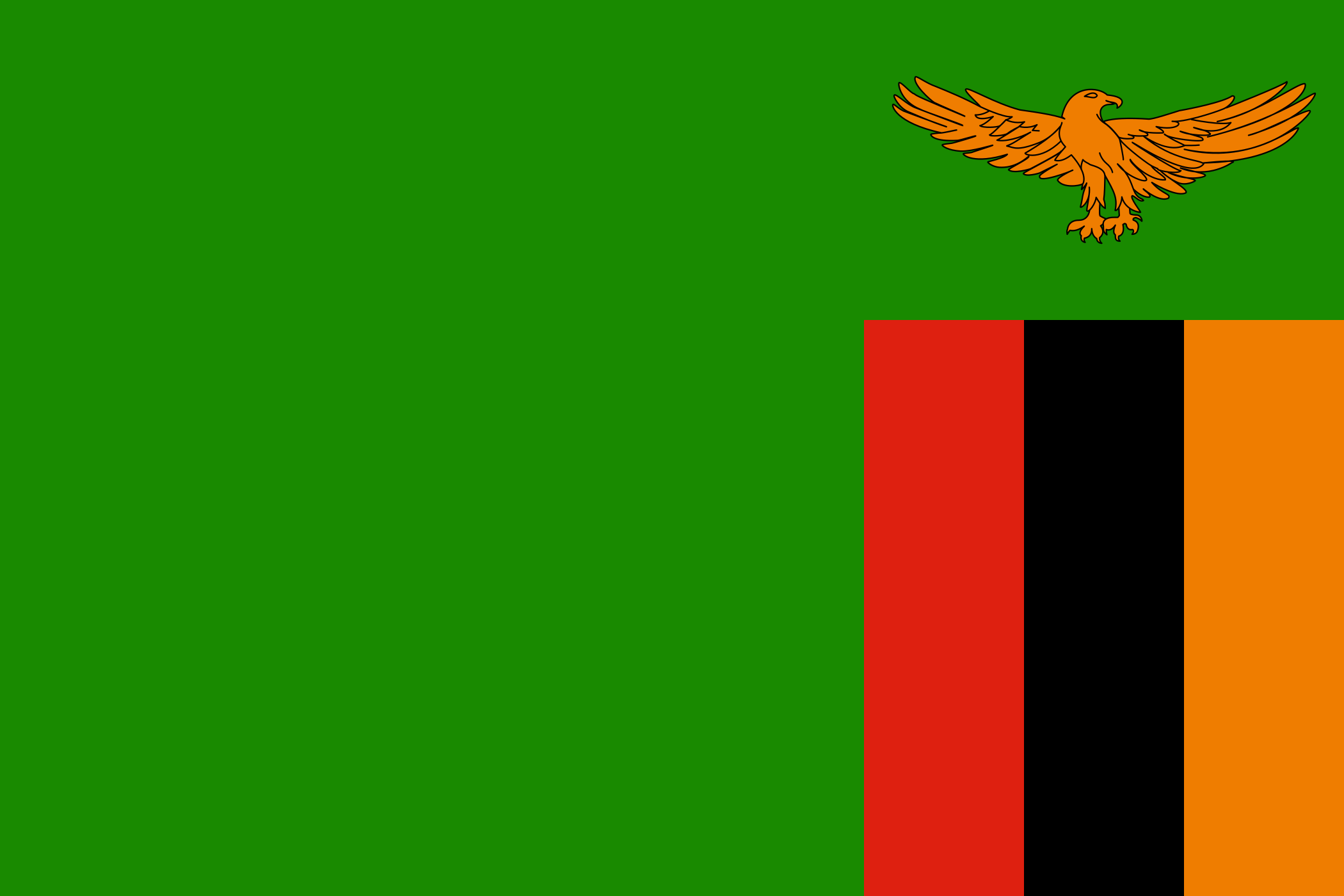
Zambia’s current national flag has a green field and an orange African fish eagle above three lower-fly stripes: red, black and orange. Adopted at independence on 24 October 1964, it received a lighter green and a revised eagle in 1996. [1]
Specification
Part I of the statutory Schedule names the flag and describes its green ground, flying orange eagle and ordered red, black and orange block. The law gives overall dimensions as 3:2, read as fly to hoist: this record consistently displays hoist to fly as 2:3. [2]
Legal colors and screen specimen
| Element | British Colour Council shade in law | SVG screen fill |
|---|---|---|
| Green field | Spectrum Green / 100 | #198A00 |
| Red stripe | Union Jack Red / 210 | #DE2010 |
| Black stripe | Jet Black / 220 | #000000 |
| Orange stripe and eagle | Spectrum Orange / 57 | #EF7D00 |
The named shades are statutory references. [2] The HEX values are the retrieved vector’s display palette, not verified conversions or physical production standards. The current Commons palette differs from this mirror; neither is selected as an authoritative digital standard. [4] Published Pantone recommendations also differ. No current government textile master or color tolerances were obtained. [3]
Construction notes
Flags of the World transcribes the scheduled drawing onto a 336-by-224 grid: each fly stripe is 40 wide and 144 high, and the eagle is 42 high, centered in the green space above. It explicitly treats eagle width as an estimate. The original government diagram could not be retrieved; these measurements are secondary evidence, not a directly inspected manufacturing sheet. [3]
| Feature | Reference geometry | Inspected SVG |
|---|---|---|
| Field | 336 × 224 | ViewBox 0 0 2100 1400; scale factor 6.25 |
| Visible stripes | 40 × 144 each | 250 × 900 each; y=500–1400 |
| Fly block | 120 wide; bottom and fly edges flush | x=1350–2100; red, black, orange |
| Eagle | 42 high; width not dimensioned in the account | Approximately 260 high above the block; detailed asymmetric paths |
The field and stripe geometry match that reference exactly. Overlapping red and orange paths are each 500 units wide; the later black path leaves three equal visible stripes. The eagle’s curved outline and thin black detail strokes are retained from the source artwork. Its approximate size and placement follow the reference arrangement, but its outline is not certified against a government master. Do not infer feather dimensions, symmetry or manufacturing tolerances from this SVG. [4]
Historical record
State House distinguishes the independence adoption in 1964 from the 1996 adjustment, which brought the eagle closer to that on the national arms. This entry represents the revised form; the darker-green 1964–1996 version is a separate historical variant. [1] The Act commenced on 4 June 1965, a legislative date rather than the first adoption date. [2]
No original 1996 proclamation or amendment specifying the revised shade was obtained. State House supplies the year but no precise day; this record therefore assigns no day or month. Flags of the World also reports that it has not located legislation for that change. No individual designer attribution is asserted here. [1] [3]
Symbolism
State House associates green with agriculture and vegetation, red with the struggle for freedom, black with the Zambian people and black Africans, and orange with copper and mineral resources. The eagle expresses freedom and the capacity to overcome national difficulties. These are government explanatory meanings, separate from construction rules. [1]
Usage
State House identifies this design as both national flag and ensign. [1] Chapter 6 regulates national-symbol use. [2] The regulations summarized by Flags of the World restrict flying to daylight and specify government, school and public-holiday contexts, with ministerial permissions for other occasions. That historical regulatory summary is not a complete current protocol guide. [3]
Source trail
- State House: National Symbols ↗ — official current identity, adoption, 1996 revision, use and symbolism; indexed page text inspected.
- National Assembly: National Flag and Armorial Ensigns Act ↗; ZambiaLII: Chapter 6, consolidation at 31 December 1996 ↗ — indexed legislative text inspected for commencement and Schedule Part I. Parliamentary PDF download timed out; the diagram was not directly inspected.
- Flags of the World: Zambia ↗ — construction transcription, regulations summary, historical revision and differing color recommendations. Its linked 2023 ministry notice could not be retrieved and is not treated as independently verified.
- Retrieved SVG mirror ↗; repository provenance and public-domain declaration ↗; Commons rights and contributor history ↗; local asset record.


Sources checked 15 September 2026. Related records: Namibia and Tanzania. Browse national flags or the Flag Index.